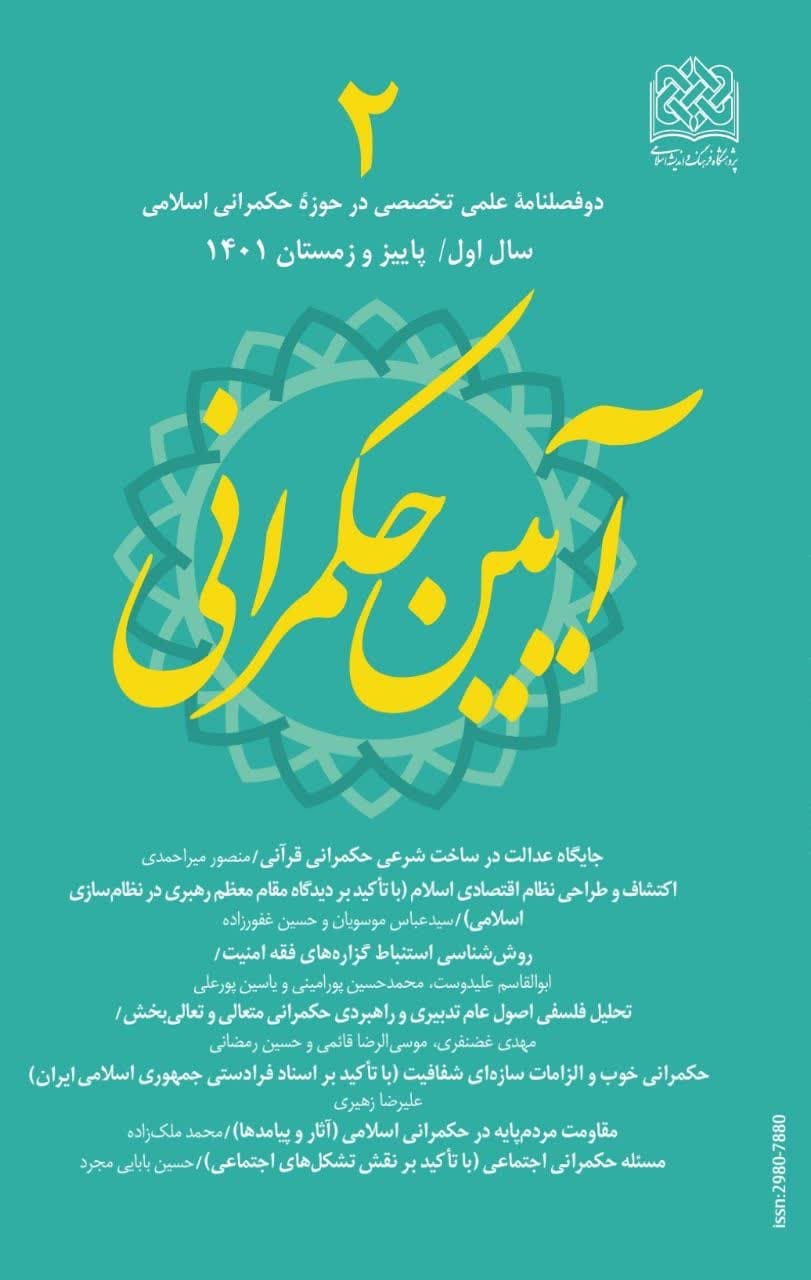
نشریه آیین حکمرانی

نشریه آیین حکمرانی

تحلیل مولفه‌های آموزش سیاسی در اسناد برنامه درس ملی و معارف اسلامی آموزش‌وپرورش از فرایندهای حکمرانی آموزشی

نوع مقاله : مقاله پژوهشی

نویسندگان
1 دانشگاه باقرالعلوم ع، قم، ایران.
2 استاد تمام گروه مطالعات سیاسی دانشگاه باقرالعلوم ع قم ،ایران
10.22034/ah.2026.2080739.1096
چکیده
این پژوهش با هدف تحلیل مؤلفه‌های آموزش سیاسی در اسناد بالادستی آموزش‌وپرورش ایران و تبیین دلالت‌های سیاستی آن‌ها از منظر فرایندهای حکمرانی آموزشی انجام شده است. تمرکز پژوهش بر بررسی چگونگی بازنمایی ابعاد شناختی، عاطفی و رفتاری آموزش سیاسی در دو سند «سند برنامه درس ملی» و «معارف انقلاب اسلامی در برنامه‌های درسی دوره متوسطه اول» بوده است تا از طریق آن، رویکردهای تربیتی و سیاستی حاکم بر این اسناد مشخص شود.

روش پژوهش تلفیقی از تحلیل کیفی و تحلیل محتوای کمی است. واحد تحلیل شامل گزاره‌ها و مفاهیم مرتبط با آموزش سیاسی در دو سند منتخب بوده و شاخص‌ها بر اساس سه بُعد شناختی، عاطفی و رفتاری کدگذاری شده‌اند. تحلیل داده‌ها بر پایه فراوانی حضور شاخص‌ها، شدت تحقق آن‌ها در مقیاس یک تا پنج و جهت‌گیری ارزشی شامل مثبت، خنثی و منفی انجام شد. سپس یافته‌ها در چارچوب تحلیل سیاستی تفسیر شد تا دلالت‌های آن برای الگوهای حکمرانی آموزشی در حوزه آموزش سیاسی روشن شود.

یافته‌ها نشان می‌دهد «سند برنامه درس ملی» از پوشش نسبتاً جامع هر سه مؤلفه آموزش سیاسی برخوردار است و در بسیاری از شاخص‌ها شدت حضور بالا و جهت‌گیری ارزشی مثبت دارد. این سند با رویکردی جامع، دانش سیاسی را با ارزش‌های ملی و انقلابی و مهارت‌های عملی و رفتاری پیوند می‌دهد و بر تربیت شهروند آگاه، مسئول و مشارکت‌جو تأکید می‌کند. در مقابل، سند «معارف انقلاب اسلامی» تمرکز بیشتری بر ابعاد شناختی و ارزشی دارد و در حوزه مهارت‌ها و رفتارهای سیاسی پوشش محدودتری ارائه می‌دهد. تحلیل مقایسه‌ای نشان می‌دهد این دو سند بازتاب‌دهنده رویکردهای متفاوتی در سیاست‌گذاری آموزش سیاسی هستند. نتایج نشان می‌دهد تلفیق جامعیت تربیتی سند برنامه درس ملی با عمق ارزشی سند معارف انقلاب اسلامی می‌تواند مبنایی برای طراحی سیاستی متوازن‌تر در آموزش سیاسی نظام آموزشی ایران فراهم آورد.
کلیدواژه‌ها
موضوعات

عنوان مقاله English

An Analysis of the Components of Political Education in the National Curriculum and Islamic Studies Documents of the Ministry of Education from the Perspective of Educational Governance Processes

نویسندگان English

mohammad emami 1
Gholamreza Behrouzi Lak 2
1 Baqir-ul-Uloom University, Qom, Iran.
2 Full Professor, Department of Political Studies, Bagher-ul-Ulum University, Qom, Iran
چکیده English

This study aims to identify and analyze the components of political education in Iran’s upstream educational policy documents and to explain their policy implications from the perspective of educational governance processes. The research examines how the cognitive, affective, and behavioral dimensions of political education are represented in two key documents: the “National Curriculum Document” and “Islamic Revolution Studies in the Lower Secondary Curriculum.” Through this analysis, the study seeks to clarify the educational and policy approaches embedded in these documents.

The research method combines qualitative analysis with quantitative content analysis. The unit of analysis consisted of statements and concepts related to political education in the two selected documents. The indicators were coded according to three dimensions: cognitive, affective, and behavioral. Data analysis was conducted based on the frequency of indicator occurrence, the degree of realization measured on a five‑point scale, and value orientation categorized as positive, neutral, or negative. The findings were interpreted within a policy analysis framework to identify their implications for educational governance in the field of political education.

The results show that the National Curriculum Document provides relatively comprehensive coverage of all three components of political education and demonstrates a high level of presence and positive value orientation across many indicators. This document adopts a comprehensive approach by linking political knowledge with national and revolutionary values as well as practical and behavioral skills and emphasizing the development of informed, responsible, and participatory citizens. In contrast, the Islamic Revolution Studies document places greater emphasis on cognitive and value‑based dimensions and offers more limited coverage of political skills and behaviors. The findings suggest that integrating the comprehensive approach of the National Curriculum Document with the value depth of the Islamic Revolution Studies document could support a more balanced policy design for political education in Iran’s education system.

کلیدواژه‌ها English

Educational governance
political education
educational policy-making
national curriculum document
Islamic Revolution education document

مقالات آماده انتشار، پذیرفته شده
انتشار آنلاین از 19 شهریور 1405

  • تاریخ دریافت 22 آذر 1404
  • تاریخ بازنگری 01 شهریور 1405
  • تاریخ پذیرش 19 شهریور 1405
  • تاریخ انتشار 19 شهریور 1405