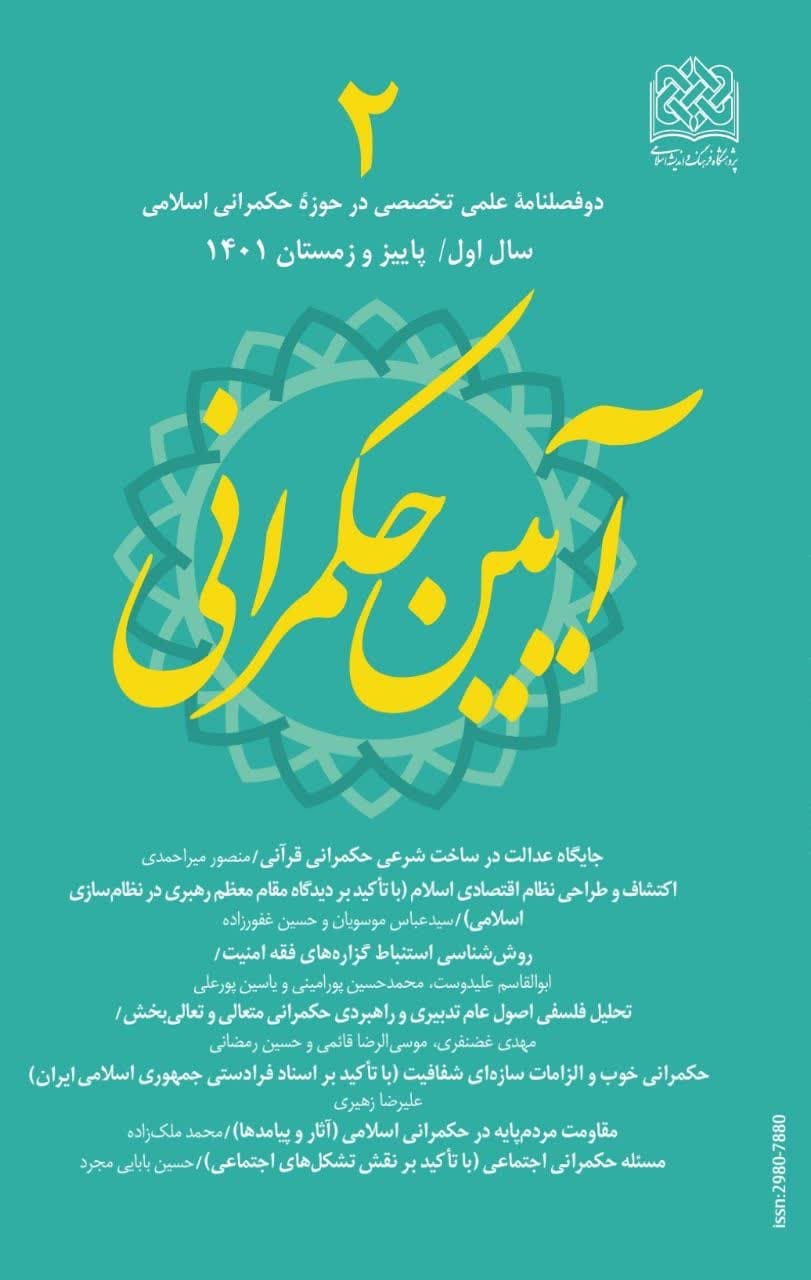
نشریه آیین حکمرانی

نشریه آیین حکمرانی

چارچوب حکمرانی قرآنی با تکیه بر واژه ولی و با تمرکز در تفسیر تسنیم

نوع مقاله : مقاله پژوهشی

نویسنده
استادیار بخش حکمرانی دانشکده حقوق و علوم سیاسی دانشگاه شیراز
چکیده
مسئلۀ حکمرانی بومی در ایران با وجود رواج روزافزون واژه «حکمرانی» در محافل علمی و اجرایی، همچنان از ابهام مفهومی و غفلت از منابع هویتی رنج می‌برد. پژوهش حاضر درصدد تدوین چارچوبی نظری برای حکمرانی قرآنی، با مراجعه به قرآن کریم به‌عنوان منبع اصیل هویتی جامعۀ ایرانی–اسلامی است. مسئله اصلی آن است که قرآن کریم، چه پاسخی به پرسش‌های بنیادین ادبیات متعارف حکمرانی (چیستی و ضرورت، نسبت با آزادی، الگوی مطلوب اعمال اقتدار، اولویت کارگزار یا ساختار و وحدت یا تعدد مراکز قدرت) می‌دهد. بر این اساس با تکیه بر واژۀ کلیدی «ولی» و با تمرکز بر تفسیر «تسنیم» آیت‌الله جوادی آملی، سعی بر بازتعریف الگوی مطلوب حکمرانی اسلامی شده است. پژوهش با روش «تحقیق موضوعی در قرآن» و همچنین روش گروه کانونی با حضور متخصان علوم قرآنی و حکمرانی انجام شده است. یافته ‌ها حاکی از آن است که مفهوم «ولایت»، هم‌ارز عنصر بنیادین حکمرانی (چینش روابط اقتدار) است و قرآن، انسان را در چهار سطح (ارتباط با نفس، خداوند، طبیعت و اجتماع) ناچار از قرارگیری در دایرۀ نوعی ولایت می‌داند. این نگاه، مسئلۀ «آزادی» را از «رهایی مطلق» به «انتخاب آگاهانۀ ولیّ» تغییر می‌دهد. همچنین قرآن با ترسیم دوگانگی «ولایت الهی» و «ولایت غیر الهی» و تمایز ابزارهای آن‌ها (آگاهی‌بخشی و کرامت‌بخشی در برابر فریب و استخفاف)، الگوی مطلوب را از نامطلوب متمایز می‌سازد. ازسوی‌دیگر، بر «اصالت شخص ولیّ» در برابر «فرع بودن شیوه‌ها و ساختارها» تأکید شده و «وحدت ولایت» به‌عنوان اصل بنیادین طراحی ساختارهای اجتماعی مطرح شده است. این چارچوب در برابر برخی از الگوهای رایج حکمرانی مدرن که بر اختفاء حکمران و مخفی ‌سازی مناسبات قدرت استوارند، پارادایمی بدیل ارائه می‌دهد که بر «آشکارسازی ولی الهی» تأکید دارد.
کلیدواژه‌ها
موضوعات

عنوان مقاله English

A Qur'anic Governance Framework Based on the Term "Walī" and the Tasnim Exegesis

نویسنده English

mojtaba javadi
Assistant Professor, Department of Governance, School of Law and Political Science, Shiraz University
چکیده English

Despite the growing prevalence of the concept of "governance" in academic and executive circles in Iran, the issue of indigenous governance still suffers from conceptual ambiguity and neglect of identity-based sources. This study seeks to develop a theoretical framework for Qur'anic governance by referring to the primary identity source of Iranian-Islamic society—the Holy Qur'an. The main research question is: what answers does the Qur'an provide to the fundamental questions of conventional governance literature, Accordingly, relying on the keyword "Walī" and the Tasnim exegesis by Ayatollah Javadi Amoli, the study attempts to redefine the desirable model of Islamic governance. The research employs the method of "thematic research in the Qur'an" and utilizes focus group sessions with experts in Qur'anic sciences and governance. The findings indicate that the concept of "Wilayah" corresponds to the foundational element of governance (the arrangement of authority relations), and the Qur'an posits that humans are inevitably situated within a sphere of Wilayah at four levels: self, God, nature, and society. This perspective reframes the issue of "freedom" from "absolute liberation" to the "conscious choice of guardian." Furthermore, by delineating the duality of "divine Wilayah" and "tyrannical Wilayah" and distinguishing their instruments (awareness-raising and dignity-giving versus deception and humiliation), the Qur'an distinguishes the desirable model from the undesirable one. Moreover, the framework emphasizes the "primacy of the person of the Walī" over the "subsidiarity of methods and structures," and establishes the "unity of Wilayah" as a foundational principle for designing social structures. This framework offers an alternative paradigm to some common modern governance models that rely on the concealment of the ruler and the obscuration of power relations—centered instead on the "manifestation of the divine guardian."

کلیدواژه‌ها English

Qur'
anic Governance, Wilayah, Walī, Tasnim Exegesis, Governance Framework

مقالات آماده انتشار، پذیرفته شده
انتشار آنلاین از 02 شهریور 1405

  • تاریخ دریافت 31 خرداد 1405
  • تاریخ بازنگری 25 مرداد 1405
  • تاریخ پذیرش 02 شهریور 1405
  • تاریخ انتشار 02 شهریور 1405