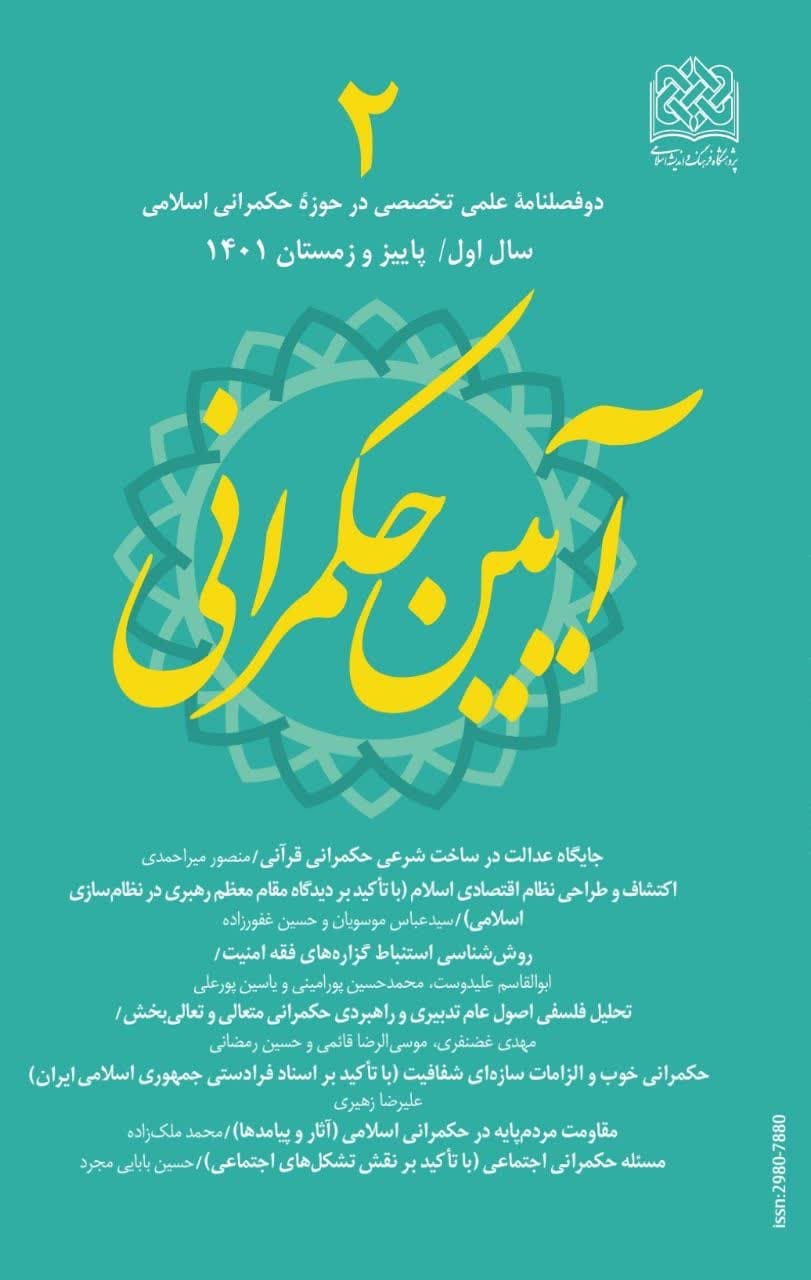
نشریه آیین حکمرانی

نشریه آیین حکمرانی

شاخصه های اعتقادی و اخلاقی کارگزاران در حکمرانی اسلامی در اندیشه آیت الله خامنه‌ای(مدظله‌العالی)

نوع مقاله : مقاله پژوهشی

نویسندگان
1 فارغ التحصیل مقطع کارشناسی ارشد علوم سیاسی از دانشگاه باقرالعلوم علیه السلام
2 عضو هیات علمی پژوهشگاه علوم و فرهنگ اسلامی
3 دانشجوی دکتری دانشگاه آزاد زنجان
چکیده
حکمرانی اسلامی، در اندیشه‌ی آیت‌الله خامنه‌ای (مدظله‌العالی)، فراتر از یک چارچوب سیاسی ساختاری، یک نظام معرفتی عملی است که ریشه در رسالت پیامبران داشته و با اتکا به کتاب الهی، هدایت جامعه را در چارچوب عدالت، توحید و کرامت انسانی تحقق می‌بخشد. از این رو، تحقق نظام اسلامی، به‌ویژه در عصر تحولات جهانی و چالش‌های داخلی، وابسته به حضور کارگزارانی است که نه‌تنها در سطح تخصص و کارایی، بلکه در سطح اعتقاد، اخلاق و بینش، در تراز آرمان‌های انقلاب ایستاده باشند

این پژوهش با هدف پاسخ به سؤال اصلی«شاخصه‌های اعتقادی و اخلاقی کارگزاران در حکمرانی اسلامی، بر اساس اندیشه رهبر معظم انقلاب، چیست و چگونه در تحقق اهداف حکمرانی اسلامی موثر میباشند ؟» به منظور پاسخ به این پرسش از روش تحلیل مضمون و بر اساس بیانات مستقیم معظم‌له استفاده شده است. در این روش، کدهای اولیه استخراج، مضامین سازمان‌دهی و نهایتاً شبکه‌ی مفاهیم فراگیر ترسیم گردید. یافته‌ها دو دسته اصلی را آشکار می‌سازد: (۱) سلامت اعتقادی شامل اعتقاد به خداوند و سنت‌های الهی، پایبندی به آرمان‌های نظام و قانون اساسی، اعتقاد به تقدس فعالیت در نظام اسلامی، تکلیف‌گرایی همراه با توجه به نتیجه، باور به ظرفیت‌های داخلی به‌ویژه جوانان و هوشیاری ایمانی در برابر دشمن؛ و (۲) سلامت اخلاقی و معنوی شامل تطبیق رفتار با شرع، توکل به خدا و شجاعت عمل، اخلاص و کسب رضای الهی، تقوا و پرهیز از غفلت، انس با قرآن و نیایش، زهد و بی‌غرتی از دنیا، روحیه‌ی جهادیانقلابی و حسن‌ظن سازنده. این شاخصه‌ها، به‌صورت متقابل و انداره‌ای با یکدیگر در پیوندند و پایه‌ی تحقق حکمرانی اسلامی حقیقی هستند.
کلیدواژه‌ها
موضوعات

عنوان مقاله English

The Belief and Moral Characteristics of Agents in Islamic Governance in the Thought of Ayatollah Khamenei (Ayatollah Khamenei)

نویسندگان English

seyedahmad kashfi 1
rasool norouzi 2
alireza karami 3
1 aaa
2 aaa
3 aaa
چکیده English

Islamic governance, in the thought of Ayatollah Khamenei (may Allah protect him), is beyond a structural political framework, a practical epistemological system that has its roots in the mission of the prophets and, relying on the divine book, realizes the guidance of society within the framework of justice, monotheism, and human dignity. Therefore, the realization of the Islamic system, especially in the era of global changes and internal challenges, depends on the presence of agents who stand at the level of the ideals of the revolution not only in terms of expertise and efficiency, but also in terms of belief, ethics, and vision.

This research aims to answer the main question: “What are the ideological and ethical characteristics of agents in Islamic governance, based on the thoughts of the Supreme Leader of the Revolution, and how are they effective in achieving the goals of Islamic governance?” In order to answer this question, the content analysis method was used based on the direct statements of the Supreme Leader. In this method, the initial codes were extracted, organizing themes were drawn, and finally a network of overarching concepts was drawn

(1) Soundness of belief, including belief in God and divine traditions, adherence to the ideals of the system and the constitution, belief in the sanctity of activity in the Islamic system, commitment with a focus on results, belief in internal capacities, especially those of the youth, and religious vigilance against the enemy; and (2) moral and spiritual soundness, including conforming behavior to Islamic law, trust in God and courage in action, sincerity and seeking divine pleasure, piety and avoiding negligence, familiarity with the Quran and prayer, asceticism and non-greed for the world, a spirit of revolutionary jihad, and constructive goodwill. These characteristics are mutually and gradually interconnected

کلیدواژه‌ها English

Governance'
'Agent'
'Belief,'
'Morality'
'Ayatollah Khamenei

مقالات آماده انتشار، پذیرفته شده
انتشار آنلاین از 29 مرداد 1405

  • تاریخ دریافت 03 اردیبهشت 1405
  • تاریخ بازنگری 25 مرداد 1405
  • تاریخ پذیرش 29 مرداد 1405
  • تاریخ انتشار 29 مرداد 1405