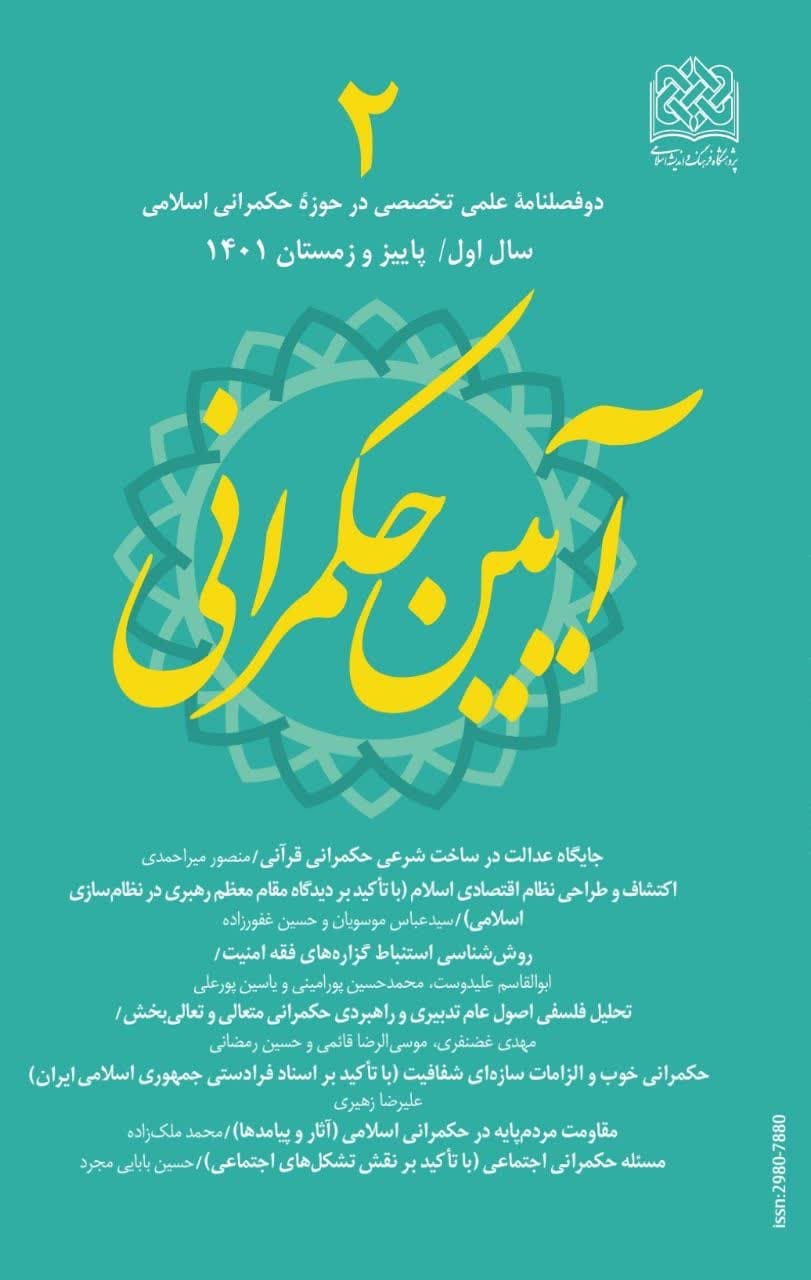
نشریه آیین حکمرانی

نشریه آیین حکمرانی

تحلیل نظری حکمرانی اسلامی از دیدگاه قرآن در اندیشه شهید مطهری

نوع مقاله : مقاله پژوهشی

نویسندگان
عضو هیئت علمی پژوهشگاه علوم انسانی و مطالعات فرهنگی
چکیده
موضوع این پژوهش تحلیل نظری حکمرانی اسلامی از دیدگاه قرآن در اندیشه شهید مطهری است. هدف پژوهش، واکاوی و بررسی «حکمرانی» اسلامی در رویکرد معرفتی، اصیل و در ساختار نظری مستقل خود اندیشمند است. مساله اصلی پژوهش بر تحلیل و بررسی نظری فرآیند شکل‌گیری حکمرانی اسلامی از دیدگاه قرآن در اندیشه شهید مطهری متمرکز است. در این پژوهش، از رویکرد موضوعی و روش مطهری بر پایه تحلیلی از انسان(سوژه اسلامی) و جامعه اسلامی در بستر مفاهیم و پدیده‌های قرآنی، در تحلیل حکمرانی استفاده‌شده است. در رویکرد اسلامی، مفاهیم قرآنی نظیر رشد و هدایت در تحلیل حکمرانی اسلامی به‌کاررفته است و در عرصه حکمرانی رابطه برهمکنشی، نظام حکمرانی و مردم و نقش اساسی دو عنصر یعنی ساخت رهبری و به‌تبع آن ساخت جامعه و سازماندهی و مدیریت آن، منجر به شکل‌گیری حکمرانی اسلامی می‌شود. در در نتیجه،تمرکز مطهری بیشتر بر استخراج حکمرانی از منابع دینی معطوف بوده و عمده تلاش او بر تحلیل عنصر «رهبری» در حکمرانی تمرکز داشته است و نسبت به آسیب‌ها و چالش‌های پیش رو و و نسبت به عدم توفیق در عرصه حکمرانی اسلامی و نیز حوزه نگران بوده است است و بر ضرورت توجه به حکمرانی در زمان خود قبل از هر اندیشمندی پی برده بود.
کلیدواژه‌ها
موضوعات

عنوان مقاله English

A Theoretical Analysis of Islamic Governance from the Perspective of the Quran in the Thought of Professor Motahhari

نویسندگان English

علیرضا دانشیار
Ali Reza Daneshyar
Assistant Professor, Institute of Humanities and Cultural Studies, Tehran, Iran,
چکیده English

The subject of this research is a theoretical analysis of Islamic governance—from a Quranic perspective—within the thought of Professor Motahhari. The study aims to examine and analyze Islamic governance through the thinker's own authentic, epistemological approach and independent theoretical framework. The central issue focuses on a theoretical analysis of the process by which Islamic governance is established, as viewed through the Quran and articulated in the thought of Motahhari. The research employs a thematic approach and utilizes Motahhari’s methodology—grounded in an analysis of the human being (the Islamic subject) and Islamic society within the context of Quranic concepts and phenomena—to analyze the nature of Islamic governance. In the Islamic approach, Quranic concepts—such as *roshd* (growth/development)—are employed to analyze Islamic governance. The interactive relationship between the governance system and the people, alongside the fundamental roles of the leadership structure and the consequent structure, organization, and management of society, give rise to Islamic governance. Consequently, Motahhari’s focus lay primarily on deriving a model of governance from religious sources, with a particular emphasis on analyzing the element of "leadership." He was deeply concerned about the challenges, potential pitfalls, and failures in the realms of Islamic governance and management; indeed, he recognized the necessity of addressing governance issues in his own time earlier than any other thinker.

کلیدواژه‌ها English

Quran,
Viewpoint,
governance
Theoretical analysis,
Professor Motahari,

مقالات آماده انتشار، پذیرفته شده
انتشار آنلاین از 20 مرداد 1405

  • تاریخ دریافت 24 بهمن 1404
  • تاریخ بازنگری 21 تیر 1405
  • تاریخ پذیرش 20 مرداد 1405
  • تاریخ انتشار 20 مرداد 1405